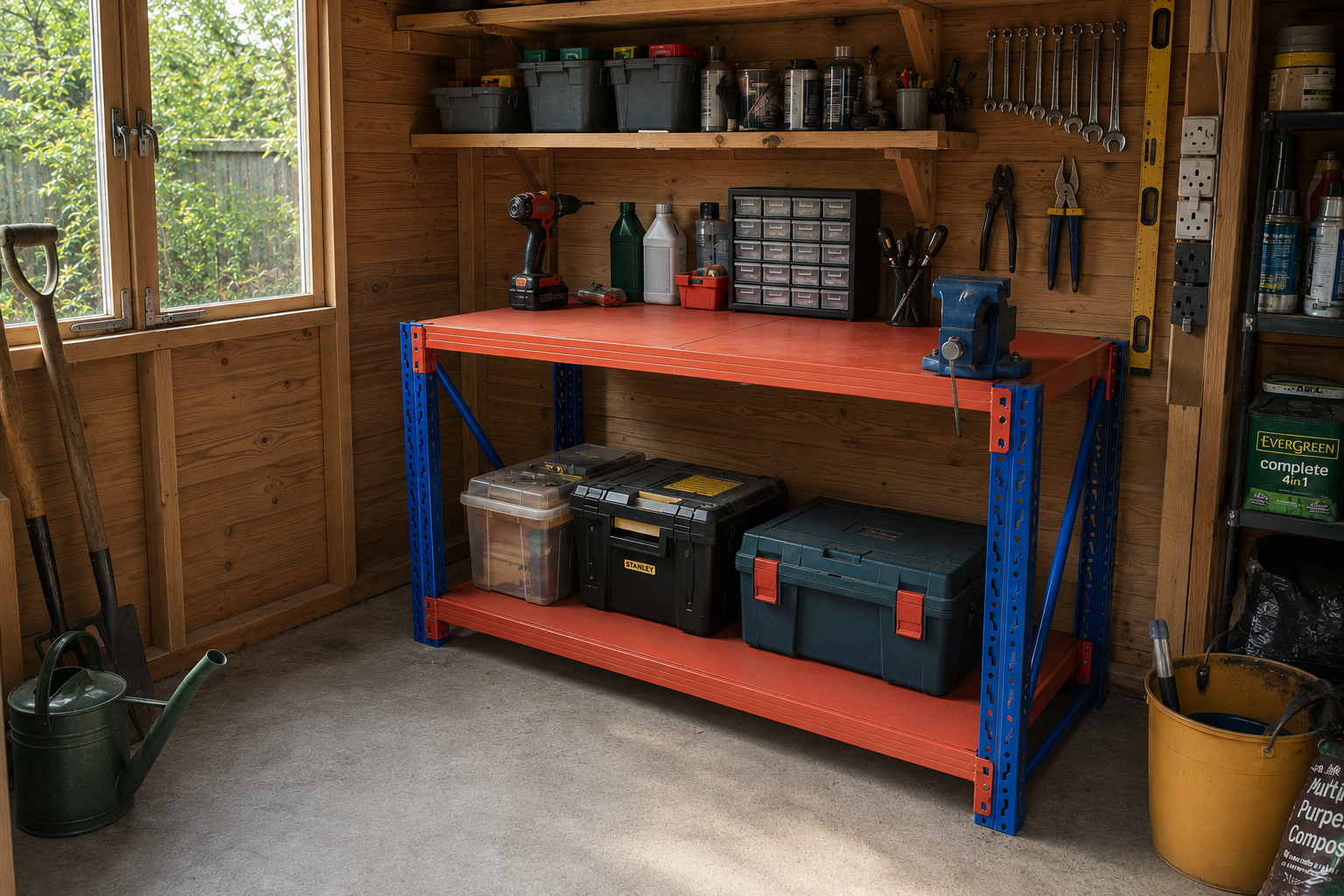
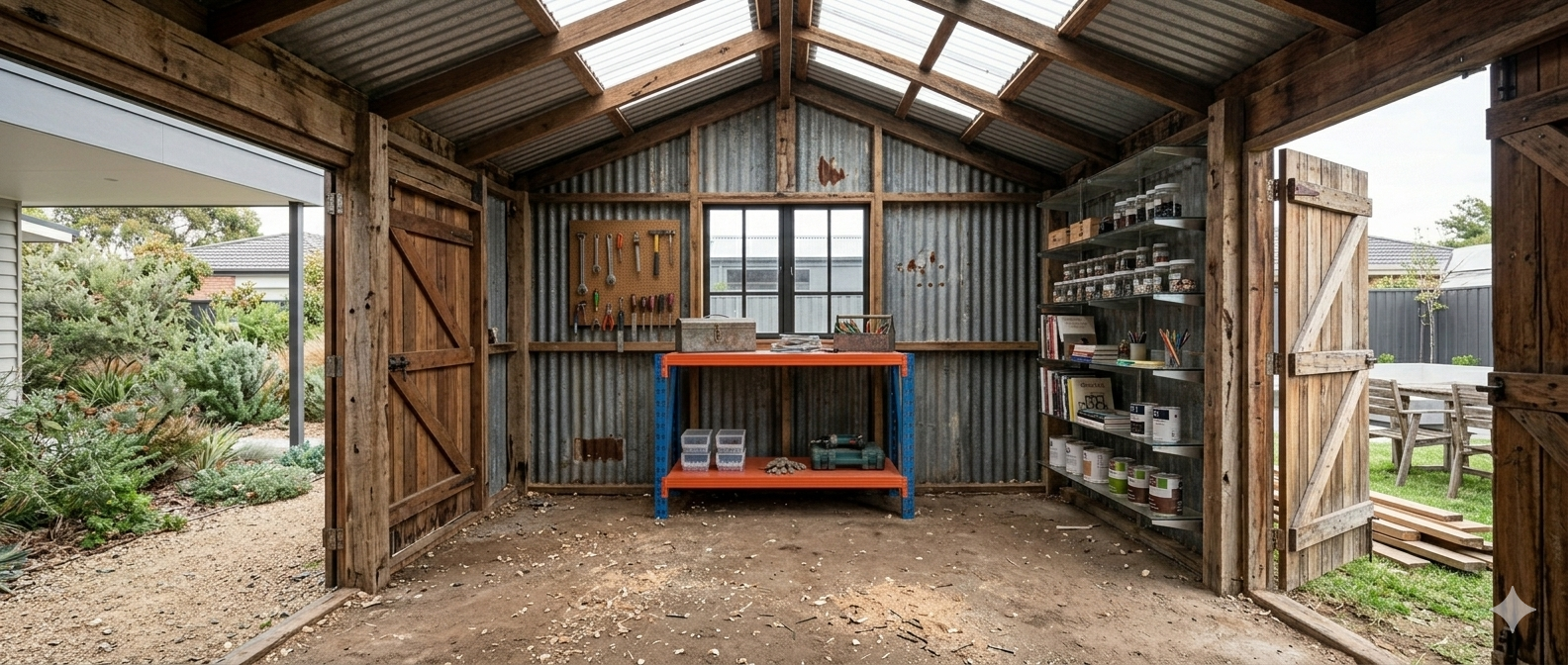
A friend of ours spent $300 on a “heavy duty” workbench from a local hardware chain two years ago. It’s now kindling. The MDF top delaminated, one of the cross-braces pulled out of its bracket, and the whole thing started rocking sideways after about eighteen months of weekend use. He now has a 200cm steel workbench rated to 500kg and reckons it’s the best investment he’s made in the garage.
That gap between what gets called heavy duty and what actually is heavy duty is worth understanding before you spend any money.
This isn’t a comprehensive buying guide with seventeen bullet points. It’s more of a brain dump from looking at a lot of workbenches and steel shelving, then talking to the people who use them hard, mechanics, tradespeople, woodworkers and blokes setting up their first proper garage workshop. Here’s what actually matters.
The Load Rating Thing, Most People Get This Wrong
If a workbench does not tell you its load rating, walk away. And if it does, think carefully about what that number means in practice.
A 150kg-rated bench sounds like plenty. You probably weigh less than that. But think about what actually ends up on a workbench in a working garage. A heavy-duty vise might be 25 to 30 kilos on its own. A full toolbox can easily be 40 or 50 kilos. Add a few power tools, some timber or steel you’re working on, and you are pushing close to or past 150kg before you have even started the job.
The other thing is that rated loads assume the weight is static and evenly distributed. When you’re working, applying lateral pressure with a vise, pushing down on a piece of timber you’re sawing, or dropping a component onto the surface, the forces are dynamic and concentrated. Benches fail at the corners and leg joints under those conditions well before the theoretical load limit would suggest.
For real use, 500kg is the number you want. That’s the rating on ADS Shelving’s steel workbenches, and it’s the threshold where you can actually use the bench hard without worrying about it. There’s a reason that’s the golden standard for trade and industrial shelving.
Why A Steel Workbench Over Timber?
There’s no shortage of beautifully built timber workbenches on YouTube and in woodworking magazines. Thick slabs of hardwood, hand-cut mortise and tenon joints, the whole thing. And for a dedicated woodworking shop where you’re doing hand-tool work and want a surface with some give to it, timber has real merit.
But that’s a pretty specific use case.
For most Australians, tradies, home garage owners, people with sheds full of tools and projects, steel makes more practical sense and here’s why.
Garages and sheds are not climate-controlled. The temperature in a Melbourne garage in February can be 40 degrees. In July it drops below ten. Timber moves with those temperature and humidity swings. Over three or four years, you will see joins open up, surfaces stop being flat, and structural connections loosen. Steel doesn’t care.
The chemical issue is the other one. If you do any automotive, mechanical, or painting work, your bench surface is going to see oil, degreasers, solvents, paint, adhesives and assorted fluids. Timber absorbs all of that. The surface degrades, it smells, and it becomes genuinely unpleasant to work on. Steel you wipe down and it’s done. That’s it.
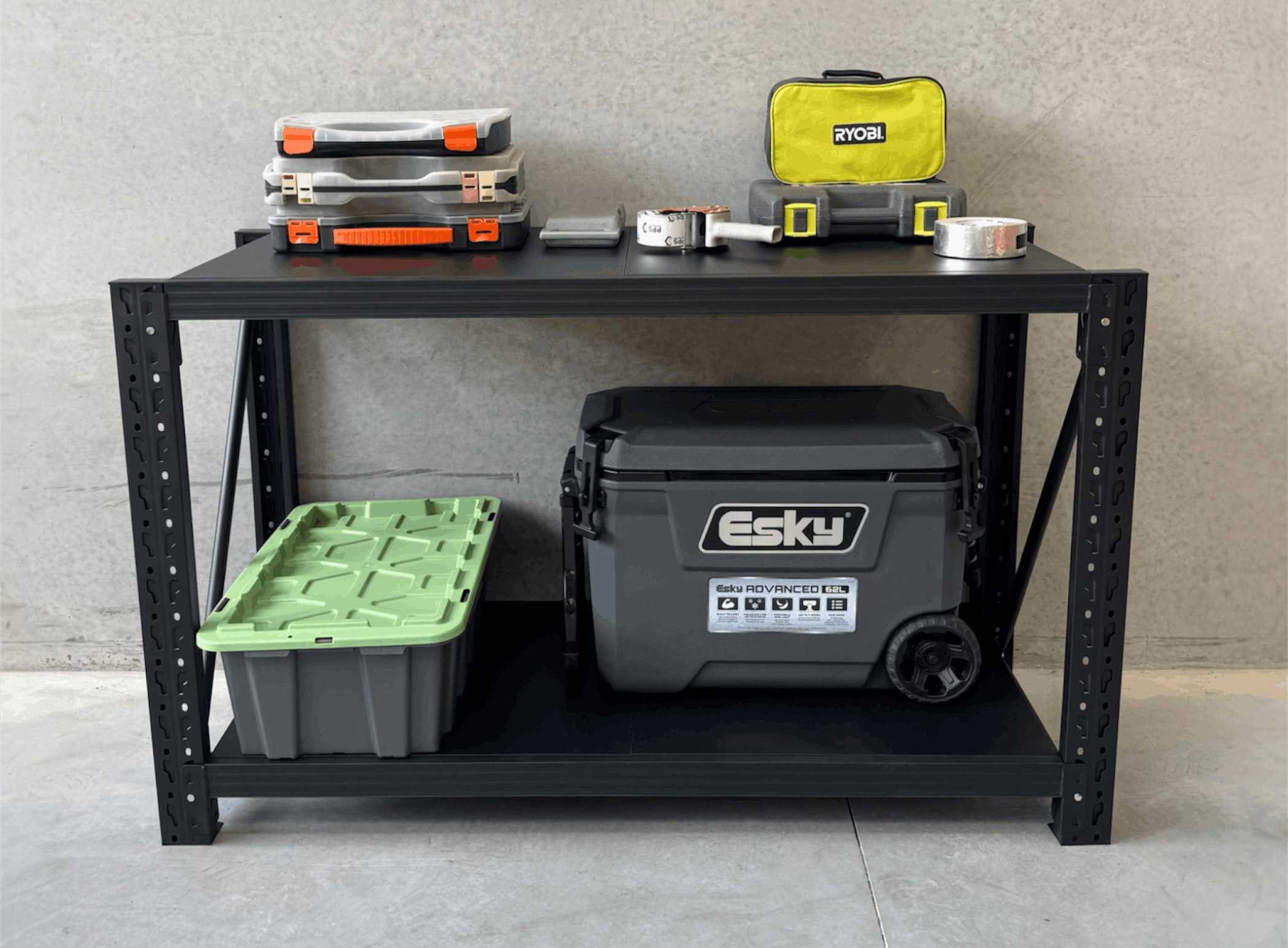
Cost is worth mentioning too. People assume a proper steel workbench is expensive. The steel work tables at ADS Shelving start at $110 for a 150cm model. That’s not a typo. Five hundred kilos of rated load capacity, steel frame and surface, in a 150 by 60 centimetre footprint, for $110. The 200cm version is $120. You would spend more than that getting a comparable timber bench built by someone who knows what they’re doing.
Getting the Size Right
A lot of people buy a workbench that’s the wrong size for the space and then wonder why it does not work as well as they hoped.
Height: The standard is 90cm, which is what ADS Shelving’s benches are made to. This suits most people doing standing work. If you’re tall, you might want slightly higher. If you’re shorter or you do detailed close work, slightly lower can save your back over a long session. But 90cm is the right starting point for the majority of garage and workshop setups.
Length: A 150cm bench works well if the garage is on the smaller side or you need to preserve floor space. It’s a solid working surface, plenty of room for most single tasks. The 200cm option is what most people find themselves wishing they had got when they settle into using the space regularly. It lets you have a permanently mounted tool at one end, a vise, a grinder, a drill press on a stand, while still having clear workspace to the side.
Depth: At 60cm, this is pretty universal and there’s not much need to overthink it. It’s deep enough to actually work on things, shallow enough to stand at without feeling like you’re reaching across a dining table.
A Few Practical Setup Notes
Where you put the bench matters almost as much as which bench you buy.
Put it near power. Most garage power points are along the walls, and you do not want long extension cords snaking across the floor where you’re working and walking. If the garage has a dedicated circuit or GPO on a specific wall, put the workbench near it.
Think about what goes above it. The wall space above a workbench is genuinely valuable real estate for storage. Tool hooks, a wall-mounted shelf, pegboard, or a dedicated shelving unit, anything that keeps the things you reach for constantly off the actual work surface. A proper garage shelving unit positioned behind the bench keeps the workspace clear while having everything within arm’s reach.
If you’re planning to mount a vise on it, think about anchoring the bench. A bench-mounted vise applies a lot of lateral and torque force when you’re working against it. For light use, the bench weight is usually enough. For serious vise work, bolting the bench legs to the concrete floor or the rear to the wall studs makes a significant difference to stability and safety.
Putting the Whole Space Together
The most functional garage workshop setups don’t really treat the workbench as a standalone purchase. The bench is the centre of the workspace, and the storage around it is what makes it actually usable.
What tends to work well is pairing the workbench with heavy duty shelving along the same wall for bulkier items, storage tubs, heavy equipment, supplies that don’t need to be on the bench, and then using additional shelving accessories or wall-mounted solutions for the things you reach for constantly during a session and for maximising storage efficiency.
The goal is a bench surface that stays clear because everything has a place nearby. That sounds obvious, but most people’s garage benches end up as the surface where things get put down and not moved. The storage setup around it is what prevents this from happening.
ADS Shelving sells both the workbenches and the shelving systems, so if you’re fitting out a space, it makes sense to look at both at the same time rather than thinking about them separately.
About ADS Shelving’s Steel Workbenches
We are based in Keysborough, Melbourne. Locally owned and operated. We carry the workbenches and the shelving in stock, which means orders actually ship in one to two business days rather than the weeks-long wait you sometimes get from offshore suppliers.
Free delivery is available in Keysborough and nearby suburbs. If you’re elsewhere in Victoria, we ship state-wide. There’s also a two-year warranty on everything, which for a steel bench at this price point is a strong indicator that we actually stand behind what we’re selling.
If you’re fitting out a full workshop or commercial shelving space and want to talk through options, custom sizing, installation, or a larger order, contact us directly. The phone number is (03) 7050 7037 and there’s a real person on the other end.